Posts Tagged Jewish Philosophy
The Crossroads of Repentance
Posted by Yonason Goldson in Philosophy, Weekly Parsha on January 1, 2014
Parshas Bo
WHY IS THIS PLAGUE DIFFERENT FROM ALL OTHER PLAGUES?
 At the outset of the Second Temple era some twenty-five hundred years ago, Ezra the Scribe oversaw the division of the Torah into parshios – portions, and set in place the practice of reading successive parshios publicly as part of the Sabbath morning prayer service. In this way, the Jewish people would collectively review of the entire Torah from year to year. The divisions of these parshios followed either historical, philosophical, or narrative patterns, so that each was, to some extent, self-contained with a particular thematic focus.
It is curious, therefore, that Ezra saw fit to place the first seven of the of the Egyptian Plagues into last week’s Torah portion, while leaving the final three for this week.
But that is not the only question. The commentaries explain that the plagues can be arranged into three sets of three, with the final Plague upon the Firstborn in a class by itself. Consequently, if it were necessary to divide the plagues at all, presumably it would be better to place the point of division after the sixth plague – which completes the second set of three – rather than after the seventh.
Nevertheless, a careful reading of the narrative reveals that the seventh plague does mark a watershed moment, not by virtue of the nature of the plague itself, but because of Pharaoh’s unprecedented reaction.
 After each of the previous plagues, Pharaoh had either stubbornly refused to yield or else promised to send the Jews out, only to revoke his permission once the plague was over. But after the seventh plague of fiery hail, Pharaoh makes an astonishing admission: This time I have sinned; G-d is righteous, and I and my people are wicked.
*****
In a discussion concerning the laws of marriage, the Talmud proposes an unlikely scenario, in which a man said to a woman, “You are betrothed to me on condition that I am atzaddik – a righteous man.” The Talmud concludes that the betrothal is binding and the woman is married, even if the man is a person of dubious reputation. Why? Because it is possible, the sages explain, that at the moment he spoke he may indeed have repented the sins of a lifetime and became a truly righteous man (Kiddushin 49b).
If so, perhaps Pharaoh’s sincere confession when confronted by the irrefutable suspension of nature — as the incompatible forces of fire and ice were forced into partnership for the express purpose of punishing the Egyptians — opened a window of opportunity for him and his nation.
From the very beginning, the Almighty had made clear His plan that Pharaoh would not let the Jews go free, providing just cause “to multiply My miracles upon the land of Egypt.” After each of the first five plagues, Pharaoh cooperated by hardening his own heart and refusing to let the people go. In contrast, after each of the last plagues before Pharaoh’s capitulation, it was G-d who hardened Pharaoh’s heart: once Pharaoh had discarded every opportunity to submit to the Divine Will, he forfeited the freedom to turn from the course he had chosen for himself through his earlier decisions.
After the seventh plague, however, we find both expressions: first Pharaoh hardened his own heart; subsequently, G-d informs Moses that He has hardened Pharaoh’s heart. How can both be true at the same time?
*****
 The power of teshuva – repentance – is unimaginable. In an instant, any individual can rewrite his past, erase a lifetime of misdeeds, and transform himself into the most righteous of men, if he sincerely desires to change and puts into effect a plan to embrace virtue. Even Pharaoh, the paradigm of wanton evil, possessed the human potential to return to the path of justice and truth. Having endowed every human being with the capacity for human renewal and redemption, G-d Himself cannot stand in the way of the truly repentant.
We might suggest, therefore, that when Pharaoh acknowledged both his own wickedness the justice of the Almighty, G-d had no power to further harden Pharaoh’s heart. In that instant, Pharaoh had positioned himself at the threshold of true righteousness, and no force in the universe could stand in his way if he chose to take the final step forward.
No force, that is, except himself. Pharaoh saw that the rain, the hail, and the thunder had ceased, and he continued to sin; and he made his heart stubborn…
The moment for change was lost and, having forfeited his chance, Pharaoh’s fate was assured. Instead of seizing his opportunity and stepping forward into a new future, he stepped backward and toppled into the oblivion of his past.
And so last week’s parsha ends: by flirting with repentance, Pharaoh held in his hand the opportunity to end the siege of plagues and halt the systematic destruction of his country. But he failed to follow through, and so the plagues resume as this week’s parsha continues on.
How often do we find ourselves looking through a window of opportunity, offered the divine gift of sudden clarity into the condition of our souls and direction of our travels upon this earth? How often are our eyes granted the vision to look upon our lives with true objectivity, to recognize in sharp relief the contrast between what we could achieve and how far we have fallen short of our potential?
And what do we do with these opportunities? Do we rise to the challenge and resolutely chart a new course into the future, or do we take notice only for an instant and then, like Pharaoh, reflexively follow the promptings of pride and stubbornness by returning to the habits of the past? Every such moment is ours for the taking or ours to discard. The way we choose will determine our future, in this world and in the World to Come.
Fathers and Sons
Posted by Yonason Goldson in Philosophy, Weekly Parsha on December 24, 2013
Parshas Vo’eira
 Students of Torah literature know that serious scholarship begins (and often ends) with the commentaries of Rabbi Shlomo Yitzchaki, familiar to the Jewish world as Rashi. His synthesis of Talmudic law, allegory, and mysticism, together with the multifaceted brilliance of his insights and his economy of language, places Rashi in a class by himself. With deceptive simplicity, he draws our attention to the most profound nuances and gently forces us to consider scriptural anomalies, weaving the breadth and depth of Torah wisdom into his pithy explication of Biblical and Talmudic passages.
Consequently, few things make scholars more nervous than Rashi appearing to point out the obvious. And nowhere does Rashi offer a comment more seemingly pointless than at the outset of this week’s Torah portion.
The Staff of Leadership
Posted by Yonason Goldson in Philosophy, Weekly Parsha on December 20, 2013
By Rabbi Yonason Goldson
Published in Jewish World Review
Parshas Shemos
And Moses responded, saying, “But [the people] will not believe me and they will not heed my voice, for they will say, ‘G-d did not appear to you.’” And G-d said to him, “What is that in your hand?” And he said, “A staff.” (Exodus 4:1-2)
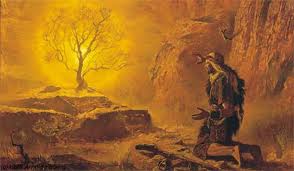 It’s easy to understand why Moses was anything but eager to accept the onus of leadership. After 210 years of Egyptian bondage, what possible reason would the Jewish people have to believe Moses when he claimed that the Almighty had sent him to redeem them? How would he convince a broken nation that he had either the authority or the ability to lead them out of slavery?
G-d’s answer, however, is even more difficult to comprehend. Seemingly, G-d wanted Moses to cast his staff upon the ground to show him its miraculous transformation into a snake – the sign by which Moses would prove himself to the people. If so, why did G-d not simply say, “Cast your staff upon the ground.” Why did the Almighty first ask Moses to identify the object he was holding?
In his classic commentary, Rabbi Meir Libush Malbim explains that Moses could have answered in one of three possible ways. As a shepherd, he could have identified his staff as a makeil, a shepherd’s crook. As an eighty year old man, he could have referred to it as a mashenes, a cane or walking stick. Finally, he could have called it as he did — a matteh, which means staff, but which also can mean scepter, a symbol of sovereignty and leadership.
Moses had directed his objection not solely at the people’s unwillingness to follow, but at his own lack of distinction as a leader. Who am I, he questioned, that the people should put their trust in me? And so, G-d presented Moses with a test.
Latkes with Cranberry Sauce?
Posted by Yonason Goldson in Holidays, Philosophy on November 21, 2013
Published at Aish.com
Will Rogers couldn’t have said it better: “No nation has ever had more, yet no nation has ever had less.” And it’s easy to understand why the two go together.
 The Talmud describes a person obsessed by the dream of becoming rich. If only he had a million dollars, he would be happy. So he labors tirelessly, clawing and scratching to amass his fortune, until what happens? The moment he finally makes his million, he immediately sets his sights on two million.
Human nature dictates that the more we have, the more we want. And the more we believe that we are entitled to have whatever we want, the less inclined we are either to be grateful for what we have or to recognize our obligations to others.
It’s somewhat heartening, therefore, that Thanksgiving has retained so prominent a place in American culture, even if most of us rarely give a passing thought to the Puritan ideals that gave birth to the holiday.
Handle with care
Posted by Yonason Goldson in Education and Parenting, Philosophy on October 16, 2013
Published in Mishpacha Magazine, 9 October 2013
Returning from a tour of Europe in the 1930s, the American humorist Will Rogers reported on the governments that had sprung up out of the chaos that followed World War I. Among his observations was this comment regarding the newly established Soviet Union: “In Russia, they got no income tax. But they also got no income.”
 Given more time, Mr. Rogers might have had a chance to observe how government-imposed poverty affects the moral fabric of a country and its people.
I was able to witness those effects for myself, up close and personal, in 1993. That was the year my wife and I taught high school in Budapest, Hungary.
We had been warned what to expect, and had been told anecdotally of a soap factory in which dozens of workers colluded with management to dilute the soap formula by adding 3% water. The result was the production of an extra 30 bars of soap per thousand, which were divvied up among the employees to be sold on the black market.
The proletariat living in the communist bloc “workers’ paradise” were thereby able to supplement an annual income that supported them for only a fraction of the year. And if an average bar of soap lasted only 33 days instead of 34, who was going to notice?
Arriving after nine years in Israel, my wife and I discovered that the Talmudic classification of tinok she’nishba – a kidnapped child raised in a society of thieves (Shavuos 5a) – is far more than a theoretical construct. The children we met, who had grown up behind the Iron Curtain with little exposure to basic moral values, were frightening examples of their environment. An alarming percentage of them had raised lying, stealing, and cheating to the level of high art.
Click here to read the whole article.
Gaining entry to the Glorious Kingdom
Posted by Yonason Goldson in Holidays on September 9, 2013
Aharon shall place lots upon the two goats: one lot “for God” and one lot “for Azazel.” Aharon shall bring close the goat designated by lot for God and make it a sin-offering. And the goat designated by lot for Azazel shall be stood alive before God, to provide atonement though it, to send it to Azazel into the wilderness.
Vayikra 16:8-10
 One of the most puzzling and disturbing rituals in Jewish practice is the goat “for Azazel.” During the afternoon of Yom Kippur, two goats are brought before the Kohein Gadol, the High Priest. By lot, one is chosen to be placed upon the altar as a sin-offering, while the other is taken out into the desert and thrown alive over the edge of a sheer cliff. What purpose could such a practice possibly serve? In truth, the symbolism of this ritual is astonishingly simple and frighteningly relevant. The two goats, identical in every way, symbolize the two possible futures that stretch out before every single human being. Like these goats – which appear indistinguishable from one another – many of the paths open to us in our youth seem equally attractive and filled with opportunity. Every child demonstrates both qualities of virtue and qualities of selfishness. Whether our higher or lower nature will win out in the end can never be reliably predicted.
To read the whole essay, click here.
Best Left Unsaid
Posted by Yonason Goldson in Holidays, Jewish Unity on August 30, 2013
Try to imagine the standard of ritual purity and cleanliness held by the Kohein Gadol, the High Priest, the spiritual envoy of the Jewish people to the Almighty whose role demanded that he never come in contact with a dead body, prohibiting him from escorting even his own parents, spouse, siblings, or children to their final resting places.
 Nevertheless, if the Kohein Gadol encountered a meis mitzvah — the unattended corpse of an unidentified stranger — while on his way to perform the service in the Beis HaMikdash, the Torah obligated him to provide a proper and immediate burial, even if that meant an underling would have to assume his duties in the Temple. The honor of his fellow Jew and respect for the divinity that resides within every member of his nation had to take precedence over virtually any other concern.
The Chofetz Chaim, Rabbi Yisroel Meir HaKohein Kagan, applies this precept in an unexpected direction.
Read the whole article here on Block Yeshiva’s new blog.
Irena Sendler: Profile in Courage and Conscience
Posted by Yonason Goldson in Culture, History, Philosophy on July 24, 2013
First they came for the communists,
and I didn’t speak out because I wasn’t a communist.
Then they came for the trade unionists,
and I didn’t speak out because I wasn’t a trade unionist.
Then they came for the Jews,
and I didn’t speak out because I wasn’t a Jew.
Then they came for me,
and there was no one left to speak for me.
Martin Niemöller, the Germany clergyman who authored these words, was one of the few who did speak out against Adolph Hitler in the early days of the Nazi party. While the majority of Germans traded conscience for convenience by closing their eyes to the atrocities perpetrated upon their own countrymen, his solitary cry for reason still echoes amidst the silence.
For his troubles, Martin Niemöller was arrested in 1937 and eventually interred in Sachsenhausen and Dachau until his eventual liberation in 1945. He lived until 1984, a voice of penance among the German people.
Among lesser known heroes is Irena Sendler, who risked her life to save some 2,500 Jewish children from the Warsaw Ghetto between 1942 and 1943. Working secretly as a member of Żegota, the Council for Jewish Aid, and using her position as an administrator for the Warsaw Social Welfare Department, Irena first tried to divert food, clothing, and medicine to Jews in the Ghetto, subsequently going door to door offering Jewish parents a chance to save their children’s lives.
“In my dreams,” she said, “I still hear the cries when they left their parents.”
One by one, Irena smuggled the children out in ambulances, gunnysacks, and body bags, finding families of Polish gentiles willing to take them in. She recorded the name of every child and hid her lists in jars she buried in a neighbor’s yard. After the war, she dug up the names and attempted to reunite the children with their families, most of whom had perished in the death camps.
On October 20, 1943, Irena was arrested by the Gestapo, who broke her legs and feet trying to force from her the names of the families who harbored the Jewish children. Refusing to divulge her secrets, Irena eventually escaped imprisonment and lived out the remainder of the war in hiding.
In 1965, Yad Vashem recognized Irena as one of the Polish Righteous Among the Nations. In 2007, she was nominated for the Nobel Peace Prize. The prize was awarded that year to Al Gore for his movie on global warming.
Few people had heard of Irena Sendler until 1999, when a high school history teacher in Kansas came across a passing reference to her in U. S. News and World Report. Three students began a research project that culminated in their award-winning play, Life in a Jar, which has since been performed hundreds of times across North America and Europe.
Authentic heroism arises from intolerance for evil, from an unwillingness to stand idly by in the face of injustice no matter how improbable the odds and no matter how dire the consequences. Like Moses, who struck down the Egyptian he found beating an innocent Jew, a person of conscience may at any moment find himself facing a critical decision between common sense and common decency, where action appears pointless but where inaction amounts to an alliance with evil. A true hero is one who recognizes that such a choice is no choice at all.
“I could have done more,” Irena said. “This regret will follow me to my death.”
Sources: The Irena Sendler Project and the Jewish Virtual Library
For more information about other unsung heroes, visit the Lowell Milken Center.
My intolerance of faith
Posted by Yonason Goldson in Culture, Jewish Unity, Philosophy on June 10, 2013
The moment the rabbi walked through the door all the students jumped to their feet… and I looked about desperately for a way out of the room.
The rabbi wore a long coat, a wide, antiquated black hat, an untrimmed beard, Coke-bottle spectacles and, incredibly, sidelocks. I knew — I just knew — what was going to happen next: the rabbi would lecture us in a thick German accent and tell us we were all damned to hell. There was no way I could sit through such an ordeal.
Read the whole article here.
Why we are unhappy
Posted by Yonason Goldson in Culture, Education and Parenting, History, Philosophy, Weekly Parsha on May 28, 2013
The Israelites have been showered with benefits — and now the complaints begin.
The Jewish people are in possession of a perfect and comprehensive system of laws which is destined to have a tremendous positive influence on their spiritual, intellectual, and cultural development. Livelihood is no problem; all their physical needs are provided, and their food descends miraculously from the heavens daily. And then “it came to pass that the people were like complainers, evil in the ears of G-d.”
The verse doesn’t specify what their complaint was; in fact it implies that they didn’t say anything specific. They were “like complainers,” murmuring discontentedly under their breath, showing vague feelings of dissatisfaction. They felt what they had was no good anymore; they wanted more, although they themselves had no clear idea of what “more” exactly they wanted. Whatever the case, this state of mind indicated a lack of gratitude, giving rise to a sense of deprivation. To put it bluntly, they were whining.
What caused them to whine? The Sages’s answer is incisive:
“They weren’t complaining; rather they were resentful. They were looking for an excuse to break away from G-d” (Yalkut Shimoni, Bamidbar 732).
Several verses later, we see another outbreak of grumbling:
“And the riffraff among them started having strong cravings.”
Again, we aren’t told what they craved. They were experiencing discomfort; they felt something was lacking, but didn’t know what. One thing was clear: they were not satisfied.
Only after this mood of discontent spread, encompassing a larger portion of the people, did their demands take on a definite form:
“And the Israelites, too, sat down and wept, and they said, ‘Who will give us meat to eat?’”
At that moment, the craving for meat became the central goal, the be-all and end-all for the people of Israel, those same people whom G-d lifted out of Egypt in order to bestow a unique, eternal legacy. But they talked themselves into a craving, and to fulfill that craving, they needed to agitate with all their might. This became their raison d’être, revealing their weak nature.
The craving for meat distorted their mental function; it clouded their memories, causing them to make claims that a person would be ashamed to voice under normal conditions. What were they saying?
“We remember the fish that we ate in Egypt for free, the cucumbers, the watermelons, the leeks, the onions, and the garlic.”
What sort of mechanism was at work here? Is there a logical explanation for their behavior?
The secret of all this is found in the world chinam — “free.” It was a Freudian slip, pointing to what was really bothering them on a deeper level, the real complaint they were ashamed to talk about. The truth was that they were complaining about the yoke of Torah and mitzvos that had been placed on their shoulders, a yoke meant to restrain their wild human impulses, which had run riot in Egypt, even as they were being enslaved and oppressed. The transition from external subjugation to a state of freedom that required character training and self-restraint was too much for them. It made them feel rebellious and conjured up fanciful memories of the delights of Egypt and the fish they ate there for free.
Yes, it was absurd of them to be demanding meat when they had manna from the heavens, offering them the taste of every food in the world. But when the source of their rebellion, the subconscious rationale underlying it, is revealed, then their behavior becomes comprehensible — and considering where they came from, even understandable.
Perhaps we can see something of ourselves here, something of the permissive society that never stops demanding meat, and destroys all that is good in our world.
Read Rabbi Grylak’s full article here.
 Torah Ideals
Recent Comments