Yonason Goldson
I'm a Talmudic scholar and professional speaker, as well as a former hitchhiker and circumnavigator, applying ancient wisdom to the challenges of the modern world. I've published seven books, including, Proverbial Beauty: Secrets for success and happiness from the wisdom of the ages.
Homepage: http://yonasongoldson.com
A Matter of Respect
Posted in Culture, Education and Parenting on February 11, 2014
In memory of my father, Yochanon ben Yaakov, whose neshoma left this world on Rosh Chodesh Adar. Originally published in the St. Louis Post-Dispatch, 17 June 2001.
 I was ten or twelve years old. My father and I had arrived at the stadium early, and I felt a thrill of excitement as we stood up for the Star Spangled Banner. Down on the field, our home team, the Los Angeles Rams, stood in a line holding their helmets under their arms. And in the row in front of us, a middle-aged man stood with his hat perched casually upon his head.
“Take off your hat,” my father said.
The man didn’t respond. “Hey you,” my father said, louder, “take off your hat.”
The man grunted an unintelligible, though clearly dismissive remark.
“You unpatriotic SOB,” growled my father; he didn’t abbreviate, either.
“Dad!” I whispered, mortified and afraid, but also faintly confused. My father had never before demonstrated any dramatic displays of patriotism.
The national anthem ended, the game began, and I guess I forgot about the incident because I never discussed it with my father, never asked him to explain an indignation that seemed entirely out of character.
But now I’m a father myself, and I don’t find my father’s action thirty years ago perplexing at all.
The Heart of the World
Posted in Philosophy, Weekly Parsha on January 31, 2014
By Rabbi Yonason Goldson
Parshas Terumah
And you shall make Me a dwelling (mikdash), and I will dwell (v’shochanti) among them (Sh’mos 25:8).
 The Mishkan, or Tabernacle, was much more than a place of worship for the Jews as they traveled through the desert. It was the prototype of the Beis HaMikdash, the Temple in Jerusalem and, even more, a microcosm of the entire universe. As such, the details of its construction offer a look behind to curtain of nature into the very design of Creation.
However, first we have to ask ourselves a question: why does the Almighty command the construction of a mikdash, which lay four hundred eighty years in the future, rather than a mishkan, which is what the Jewish people were about to build.
The word mishkan literally means “that which creates a dwelling.” In the desert, with no land, no permanence, and no boundaries, the tabernacle provided the focal point around which the Jewish nation could coalesce. Of course, the spirit of HaShem is everywhere. But the physical House of G-d placed in the midst of the people would bind them together in a way that their abstract identity as a holy people could not. Indeed, a careful reading of the verse reveals HaShem’s true intention. Build Me a tabernacle, commanded the Almighty, and I will dwell not in it but in and among them, the people.
Consequently, we understand that the Mishkan was never intended to be permanent. Its purpose was to sustain the people until they could enter the land. At that point, they would no longer require a mishkan, for the land itself would bind them together as a nation. From then on they would require a mikdash — literally, that which creates sanctity. Once in the land, a House of G-d would serve to remind the people of their divine mission and inspire them to strive for ever higher levels of spiritual achievement.
To that end, the people would gather three times a year for the pilgrim festivals — Pesach, Shavuos, and Sukkos. And herein lies the secret of the Mikdash, as explained by the Chassidic classic Arvei Nachal.
 Just as our world exists within three physical dimensions, similarly was it created along three spiritual axes: space, time, and life. Of these three, the human body presents the most familiar model for understanding the spiritual pattern of the universe.
Within the body, the heart pumps blood throughout the system. Through arteries and capillaries, the blood reaches every corner of the body, carrying with it oxygenated blood that literally breathes life into every cell. Returning to the heart, the blood is pumped through the lungs to become oxygenated once again, so that the body’s internal cycle of life can continue. This is the essential structure of life.
The same pattern manifests itself in the nature of time. According to the kabbalists, time is not linear but cyclical. In the course of each year, every soul visits every day and every moment in the 365 days that describe the solar year. Just as the flow of blood deposits life-giving oxygen to the body’s cells, similarly does each soul deposit kedusha, sanctity, to the individual moments that together form the body of time. And just as the body’s cycle begins and ends with the heart, similarly does the annual cycle begin and end with Yom Kippur — the holiest day, and the “heart” of the year. The extent to which the Jew renews his relationship with the Almighty on Yom Kippur will affect not only his own fortunes for the coming year, but the fortunes of all mankind. Symbiotically, our involvement in Torah and mitzvos draws the innate kedusha from the temporal plasma of the universe and allows us to return to the next Yom Kippur on a spiritual level higher than we were on the year before.
 Finally we come to physical space. Once established in the land, the Jewish people spread out to settle their country, striving to strike the perfect balance between material prosperity and spiritual purpose. Their involvement in Torah and mitzvos throughout every corner of the Land of Israel would draw out the intrinsic spiritual essence of the land, enabling them to achieve greater levels in divine service as they prepared for each successive festival, when they would come together at the Beis HaMikdash — the heart of the world. Inspired and elevated by each festival, the Jews would return to their homes, elevated in their spirituality so that they could elevate the land on which they toiled, thus creating a virtuous cycle that brought them ever closer and closer to their Creator.
After the destruction of the Temple in Jerusalem, the great sage Rabban Yochanon ben Zakkai decreed that every shul, every place of Jewish prayer, should be treated as a mikdash ma’at, and Temple in miniature. Every time the Jewish community comes together to pray, on weekdays and on Shabbos, on festivals and on the High Holy Days, we have the opportunity to renew the cycle of spiritual elevation. Prayer is not for G-d; it is for us. It is not a burden; it is a privilege and an opportunity. It is not an inconvenience; it is as fundamental to our existence as our life’s blood, as our heart, and as our soul.
The Slow Road to Sanctity
Posted in Philosophy, Weekly Parsha on January 22, 2014
Parshas Mishpatim
You shall not ascend my altar by steps, so that you will not reveal your nakedness upon it. And these are the statutes that you [Moses] shall place before them [the Jewish people]
Exodus 20:23-21:1
During the early days of the Second Temple era, the sages divided the Torah into portions, or parshios, to be read on successive Sabbaths. The juxtaposition of any two of these parshios always alludes to some principle in Jewish thought. In the case of this week’s Torah portion, however, the connection with the end of last week’s parsha seems particularly elusive.
 After the drama of the Almighty’s revelation at Sinai and the giving of the Torah, the narrative switches to a rather dry and technical description of the altar in the Tabernacle. Not by stairs should the kohain go up, lest the gaping of his robes expose his private regions to the stones upon which he walks; rather, he should ascend by a ramp, so that his shorter, more even steps will not result in any impropriety.
Immediately afterward, the Torah introduces the mishpatim, the statutes that govern civil law by establishing the legal parameters of business dealings, private property, loans, and damages. Superficially, no two subjects within Torah could be more distant from one another.
 The revered Chassidic Master, Reb Elimelech of Lizensk, offers a tantalizing explanation. As we go through life, we should see ourselves as kohanim, the priests of the Almighty, engaged in a perpetual quest to ascend spiritually, approaching ever nearer to a more perfect service upon the conceptual altar of the Creator. Every attainment of a new spiritual level is called by the kabbalists a madrega — a “step” onward and upward. The Jew is not meant to remain static, but to pursue ever more challenging goals in pursuit of spiritual perfection.
The danger, however, is that we may try to take too much upon ourselves, that we attempt to move forward by unrealistic leaps, that we may seek inspiration in the mystical and ethereal at the expense of more fundamental forms of heavenly service. By reaching for the stars, we may find ourselves without firm footing beneath us, leaving ourselves vulnerable to the indictments of the divine attribute of Justice. By artificially propelling ourselves to a level that we cannot realistically sustain, we may cause ourselves to be judged with a strictness that is beyond our capacity to endure.
The ramp up to the altar, therefore, serves as a symbol of the measured, determined consistency with which we should approach our commitment to spiritual growth. HaShem may bless us at times with great leaps forward and moments of dazzling inspiration, but spiritual development is often like physical development — painfully slow and paradoxically mundane.
This, teaches Reb Elimelech, is the connection between the details of the altar and the words that introduce this week’s portion, “And these are the statutes…” If we look for spiritual excitement only in arcane mysteries and secrets, we will inevitably miss the most essential opportunities for spiritual growth that our daily routine provides. The concern for others, for their money and their time and their property, the respect for boundaries both personal and legal — these are the sensitivities that most effectively and meaningfully transform us into spiritual beings. If we think we can overlook them in our quest for personal revelation and divine intimacy, we will have no foundation upon which to stand. If we carefully cultivate them, we will awaken within ourselves the spiritual vision that will enable us to recognize the presence of the Almighty in every aspect of our lives.
Tu B’Shevat: The Roots of Wisdom
Posted in Ethics of Fathers, Holidays, Philosophy on January 15, 2014
By Rabbi Yonason Goldson
From Celestial Navigation, a publication of Block Yeshiva
 [Rabbi Elazar ben Azariah] used to say: Anyone whose wisdom exceeds his good deeds – to what is he similar? To a tree whose branches are many and whose roots are few; then the wind will come and uproot it and turn it over. As it is said: “And he will be like a lonely tree in a wasteland that will not see when good comes. It will dwell on parched soil in the desert, on a salted land, uninhabited” (Yirmyahu 17:6). But one whose deeds exceed his wisdom — to what is he similar? To a tree whose branches are few and whose roots are many; even if all the winds in the world come and blow against it, they will not move it from its place. As it is said: “And he shall be like a tree planted by the water spreading its roots toward the stream, and it will not notice when heat comes. Its leaves will be fresh, in a year of drought it will not worry, and it shall not cease yielding fruit” (ibid., 17:8).
Pirkei Avos 3:22
On the surface, Rabbi Elazar’s allegory appears easy to understand. Scholarship alone is not enough; only when wisdom influences action and produces virtue will it endure.
On closer examination, however, the image of a tree raises many questions. If wisdom is the source of action, why does Rabbi Elazar not compare wisdom to the roots and good deeds to the branches? Just as roots draw sustenance from the earth to nourish the tree, similarly the roots in the allegory should represent the wisdom that fosters action.
Moreover, granted that wisdom is not enough, and that without good deeds a person is like a tree without adequate support, why describe a tree with few branches in the second part of the allegory? If a person has many good deeds, why do the “branches” of his wisdom still have to be “few”?
And what is the point of mentioning the wind at all? Would it not have been simpler to describe a tree so unstable that it is in danger of toppling under its own weight, regardless of external forces?
Finally, why does Rabbi Elazar prove his lesson with verses describing land that is either parched or abundantly watered? Since the tree has no control over its environment, how are these verses relevant to his illustration?
THE ROAD OF GOOD INTENTIONS
Rabbi Abraham Twersky writes that when he was a boy, a visiting rabbi asked him the following question: Since the Torah equates thought with action, then thinking of a question should be the same as actually speaking it. “If so,” concluded the rabbi, “you should be able to answer the question I am thinking at this moment.”
The young Abraham Twersky offered the only reply that seemed to make sense: “I am thinking of the answer,” he said.
The Torah’s equation of thought and deed informs us that thoughts are the first step toward actions and that actions are imperfect without sincere intent. Nevertheless, thoughts alone are not enough: although wisdom is indisputably the source of action, it is action that secures and preserves our wisdom. In the famous words of the Sefer HaChinuch, “man is drawn according to his deeds; his heart and all his thoughts follow inevitably after his actions, whether for good or for bad.”[1]
Unless properly channeled, wisdom comes to nothing; even worse, it may become twisted and corrupted through rationalization.
 Understood this way, actions are indeed the roots that support wisdom and enable it to endure, whereas scholarship that is not proportional to the measure of good deeds creates moral and spiritual instability. Esoteric scholarship that is not firmly grounded in practical wisdom and disciplined behavior becomes first a distraction and ultimately a danger. One who dabbles excessively in theoretical studies with little relevance to everyday life can easily become so lost in his musings that he neglects the mundane but essential responsibilities of worldly existence.
PRACTICE MAKES PERMANENT
Whether or not we like it, as human beings we are creatures of habit. This can work against us: we easily fall into routine, often fail to give our activities the full attention they require, and frequently resist thinking outside the box. But routine can work in our favor as well. Just as bad habits are broken only with difficulty, good habits propel us in the right direction even when our minds are elsewhere.
Why do star basketball players invest hours a day shooting free throws, and why do actors rehearse their lines again and again, long after they have learned them by heart? Because they understand that the more a person practices the more he implants natural actions and reactions into his subconscious, until they become woven into the fiber of his being. The routine of repetition leaves an imprint upon his behavior that will govern his actions for the rest of his life.
Similarly, the more good deeds we perform, the more we inculcate good behavior into our psyche, and the greater the likelihood that we will continue to conduct ourselves in the same manner. When the winds of temptation, of impulsivity, of self-interest, and of self-indulgence blow against us, the scholar will easily buckle before them unless he has trained himself in the performance of good deeds proportional to his scholarship.
THE WATERS OF VIRTUE
Why does one tree develop a complex root system when another becomes overgrown with branches? A tree that is planted near water easily stretches out its roots to absorb the ready supply of life-giving water that surrounds it. In contrast, a tree planted in parched soil sends its branches in all direction as it attempts to absorb moisture from the atmosphere. Its search for sustenance creates its instability.
Unlike trees, which have no control over where they take root, human beings can determine their own environment. If one chooses to live among people unconcerned with the goodness of their deeds, then he will become like a “lonely tree in a wasteland that will not see good when it comes.” Without support from a community committed to virtuous conduct, even if one studies Torah and increases his wisdom, his wisdom will not endure, for it will remain disconnected from the actions necessary to preserve and protect it.
However, if he “plants” himself in a community devoted to applying the wisdom of Torah to concrete actions, then he will flourish, without fear of depletion, and will always enjoy the spiritual fruits of his labors.
According to Maharal, this equation is implicit in the Torah’s comment that man is a tree of the field (Devarim 20:19).[2] We are in this world to grow, to stretch forth our branches, to reach for the heavens but remain firmly planted on the earth, to sustain the world with the fruit of our efforts by striving to fulfill the unique potential that resides in every one of us. When our intellect guides our actions according to the laws and the values of the Torah, then our branches become an extension of our roots, and we find ourselves securely fastened to both this world and the World to Come.
 The insights of Rabbi Elazar ben Azaryah offer a deeper understanding into the essence of Tu B’Shevat, when we celebrate the New Year of the trees. Just as Rosh Hashanah reminds us that the whole world was created for man, Tu B’Shevat reminds us of man’s obligations to the world in which he lives. The resources upon which we depend similarly depend on us, and the fruits of the natural world that sustain us will be sustained only when the fruits of our labors are so directed that they draw Hashem’s blessings back down from the heavens and replenish the bounty of the earth.
And so Hashem took Adam and showed him the trees of the Gan Eden, saying, “See My works, how beautiful and praiseworthy they are! Now all that I created is for you. Take care that you do not destroy My world, for it there is no one to repair it after you.”[3]
[1] Parshas Bo, mitzvah 16
[2] Derech HaChaim, ad loc.
[3] Koheles Rabbah 7:13
With all your Heart
Posted in Ethics of Fathers, Philosophy, Weekly Parsha on January 14, 2014
By Rabbi Yonason Goldson
Parshas Yisro
It is said that the great sage Rabbi Yisroel Salanter once found himself profoundly depressed over the spiritual shortcomings of his students and his community. As the High Holidays approached, Rabbi Yisroel left to search out the company of Jews more passionate about their own relationship with the Divine.
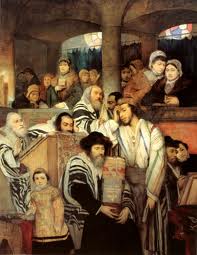 Traveling from village to village, Rabbi Yisroel prayed with one congregation and then another until finally, in a small synagogue in an unremarkable town, he found himself surrounded by individuals who seemed to take their prayers as seriously as he did. Rabbi Yisroel positioned himself directly behind one parishioner who seemed to pray with extraordinary devotion. Here, he thought, he would surely find his inspiration.
The High Holidays service began exactly as Rabbi Yisroel had hoped. The Jew in front of him swayed slowly as he prayed, the whispered words of the liturgy falling from his lips with a quiet intensity that made Rabbi Yisroel feel as if he were being drawn steadily upward on his neighbor’s coattails. When the man intoned, “I am mere dust and ashes before You,” Rabbi Yisroel experienced a profound sense of his own humility before G-d.
The time arrived for the reading of the Torah, and the gabbai of the congregation began distributing honors among the notables of the community. First he called up a Kohein, and then a Levi. Had the gabbai known that the great Rabbi Yisroel Salanter graced his shul, he would certainly have accorded him the prestigious third aliyah. But Rabbi Yisroel had chosen to remain anonymous and thought nothing of it when no honor was bestowed upon him. He assumed that the recipient called up for the third Torah reading must be one of the synagogue’s most prominent members.
For the fourth honor, the gabbai called the name of Rabbi Yisroel’s neighbor, from whom the sage had drawn such inspiration. Upon being called to the Torah, however, the man suddenly flew into a rage. “You called him third,” he cried, pointing to the previous honoree, “and you only called me fourth? Who is he that I should be second to him?”
Astonished and appalled, Rabbi Yisroel rushed forward. “My friend, I can’t believe my ears. Only a moment ago you were saying before the Almighty that you are only dust and ashes.”
The man turned to Rabbi Yisroel, still furious, and declared, “Before G-d I am dust and ashes; not before him!”
Even the great Rabbi Yisroel Salanter had to learn an unpleasant lesson that year about jumping to superficial conclusions. He returned to his community and reapplied himself to the business of spiritual growth.
TWO PATHS THAT ARE ONE
Rabbi Chanina used to say: If one is found pleasing by his fellows, then he is pleasing to the Almighty; but if one is not pleasing to his fellows, then he is not pleasing to the Almighty.
 In this teaching (Pirkei Avos 3:13), Rabbi Chanina alludes to a basic principle of Torah observance: The commandments articulated in the Torah comprise two types of obligations — those between man and G-d, and those between man and man.
Many people neglect the first category, believing that as long as one is “a good person,” his relationship with the Almighty can be more casual and subjectively defined. In practice, however, with no absolute authority to define what is good, each person will inevitably judge himself “good” in his own eyes.
Others neglect the second category, believing that if they are ardent in their relationship with G-d, then it is of no consequence how they relate to their fellows. It is this second type of fallacy that Rabbi Chanina comes to refute.
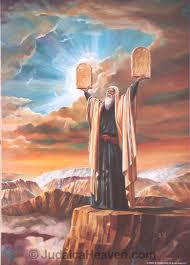
The tablets received by Moses at Sinai are often depicted as heart-shaped, suggesting a deeply symbolic lesson: Just as our blood has to flow efficiently through both the right and the left chambers of the heart to maintain a healthy body, so too does a healthy soul depend upon an interdependence between the two categories of mitzvos.
THE SECRET OF THE TABLETS
Each of the two tablets contains five of the Ten Commandments. The first five are precepts between man and G-d; the second five are precepts between man and his fellow. And each pairing reflects the integral nature of the two categories:
I am the L-rd, your G-d — Do not commit murder
Have no other gods before Me — Do not commit adultery
Do not take G-d’s name in vain — Do not steal
Honor the Sabbath — Do not testify falsely
Honor your father and mother — Do not covet what belongs to your neighbor
The first commandment is I am the L-rd, your G-d; the sixth (which is the first on the second tablet’s group of five) is the prohibition against Murder. Only by acknowledging that there is a Creator who fashioned every human being in His image can one rationally explain why eating steak and swatting flies is any different from shedding human blood. Without such a distinction, we should all be either Vegans or serial killers.
The second commandment is the prohibition against Idolatry; the seventh is the prohibition against Adultery. The former is faithlessness in one’s relationship with the Almighty; the latter faithlessness in the sacred vow of marriage.
The third commandment is the prohibition against Taking G-d’s Name in Vain; the eighth is the prohibition against Stealing. The Almighty placed everything in this world for our use, conditional only upon recognizing that everything comes from Him. To misuse His name is to fail in that recognition, rendering all benefit from the material world the equivalent of theft.
The fourth pair of commandments includes the requirement to honor and keep the Sabbath, and the prohibition against Bearing False Witness. Since the Sabbath testifies to the creation of the world, one who violates it is in effect testifying falsely against the Creator.
 The final pair includes Honoring Parents and the prohibition against Coveting, or seeking to acquire what belongs to one’s fellow through manipulation. Although the former appears to belong in the category between man and man, it teaches us to appreciate that our parents are the connection between us and our Creator. Just as parents withhold from their child that which they believe is not good for the child, similarly will G-d withhold from each of His children that which may not serve their spiritual best interests. One who internalizes this will never feel envy toward his neighbor.
The Torah commands us to serve the Almighty “with all your heart,” suggesting that our service of G-d is imperfect as long as our relationship with others is incomplete. Rabbi Chanina does not mean that we should curry favor with our neighbors through flattery or bribery. Rather, he comes to teach us that through genuine concern for our fellows we will transform ourselves into G-dly human beings.
Adapted from an article originally published at Aish.com
Proverbial Beauty: Secrets for Success and Happiness from the Wisdom of the Ages
Posted in Culture, Philosophy on January 13, 2014
YOU CAN HELP!
I’ve published the first chapter of my new book online: Here’s the “cover” blurb and the link:
 Take a guided tour beneath the surface of the world we live in with this marriage of King Solomon’s Book of Proverbs and Leonardo Da Vinci’s Mona Lisa, reexamining Solomon’s eternal wisdom through the lens of news stories, scientific discoveries, the natural world, folktales, historical vignettes and, most notably, through the mystery and brilliance of the Mona Lisa – all woven together in a lyrical and engaging medley of the human experience.
Please take a few minutes to read the short introduction. If you like it, read the first chapter. If you have any critiques, I’d love to hear them. And if you really you like it, click on the “vote” button, then repost it and spread the word. You may have to create a Wattpad account to view it, but that only takes a moment.
Thank you!
http://www.wattpad.com/story/11547048-proverbial-beauty-secrets-for-success-and
The Death Watch
Posted in Culture, Philosophy on January 8, 2014
ARE YOU READY FOR THE END OF TIME?
Whether or not you’re a fan of science fiction, it’s always intriguing when our life in the present imitates the art of our past.
 In Robert A. Heinlein’s first published story, Life-line, Professor Pinero builds a machine that can predict any person’s day of death. To verify Pinero’s claim, a committee of scientists submit to his examination, after which their names are sealed in separate envelopes, each with the date-of-death printed on the outside, and locked away for future verification. The first to die is Pinero himself, murdered by zealots who believe he is tampering with Fate. Upon learning of Pinero’s death, the chairman of the science committee calls for the box of envelopes and, after determining that Pinero had accurately predicted his own demise, burns the whole batch of envelopes to ashes.
So… what would you do? If it were possible to predict the day of your death, would you want to know?
Well, now you can.
More or less.
Fredrik Colting has already taken 3000 orders for his new digital watch, the Tikker. Instead of a single row of numbers, the Tikker has three. One row tells the time like any ordinary watch. However, a second row displays years, months, and days, while a third row displays hours, minutes, and seconds, inexorably counting down toward — you guessed it — the day you will die.
Mr. Colting has nicknamed his invention the happiness watch.
The Closeness of Redemption
Posted in Philosophy, Weekly Parsha on January 7, 2014
By Rabbi Yonason Goldson
Parshas Beshallach
WHY G-D IS CLOSEST WHEN HE FEELS FARTHEST AWAY
Then Moshe and the Children of Israel will sing …
 As if with one voice, the commentaries wonder at the future tense employed here by the Torah. The meaning of the verse is clear: then, after the splitting of the sea and the destruction of Pharaoh’s chariots, the Jews sang their praises of the Master of the World who had provided their miraculous salvation.
If so, why the future tense?
All the commentaries begin with Rashi: Then, when [the nation] saw the miracle, it felt inspired to sing. But what has Rashi added? Is it not obvious that their song of praise was inspired by the events through which they had been saved?
Perhaps we can find a clue in the structure of our daily prayers. The weekday Amidah, the standing prayer, is divided into three distinct sections. The first three blessings are expressions of praise, through which we acknowledge that we are standing before the One who hears supplications and has the power to answer them. The final three blessings are expressions of gratitude, wherein we thank Hashem for listening to and considering our entreaties.
 The body of the Amidah, the thirteen central blessings, are expressions of request, wherein we ask Hashem to bestow upon us the basic necessities of life so that we can serve Him by studying His Torah and upholding His commandments. By recognizing that G-d is the source of all blessing — of intelligence, health, sustenance, justice, and all things physical and spiritual — we remind ourselves of our own responsibility to direct our lives toward fulfilling the higher purpose for which we were created, and we turn our attention inward to assess whether or not we are living up to our individual potentials.
Of this central group of petitions, the final blessing poses something of a curiosity. Shema koleinu – Listen to our voices, we cry out, and accept our prayers with favor and mercy. But is the value of asking Hashem to listen to our prayers? If He is already listening, then this request is superfluous; if He is not listening, then it is pointless. Moreover, why is it positioned at the end of our list of requests? Presumably we should ask G-d to listen before we begin to ask, not after we have finished asking?
I heard a variation of the following from Rav Dovid Gottleib: If I ask my friend to lend me ten dollars, and he lends me ten dollars, naturally I respond by saying, “Thank you.” However, if my friend tells me he doesn’t have the money, but he will get it for me, I also respond by saying, “Thank you.”
In the first case, I’m expressing appreciation for having gotten what I want. But in the second case, even though I still don’t have the ten dollars, I express my appreciation nonetheless. And in this second case, my expression of thanks describes a higher level of gratitude, not merely for having gotten what I want but for my friend’s interest, concern, and effort, which ultimately mean more to me than mere money.
Similarly, in the blessing of Shema koleinu, we are not asking the Almighty for what we have already requested; rather, we are asking Him to allow us to recognize His involvement in our lives. More than the things we have requested, we want to feel that Hashem cares about us, that He is responsive to our needs and our desires — and we want the accompanying confidence that when Hashem withholds what we want it is because the fulfillment of these requests is not in our own spiritual best interest.
At no time are we closer to G-d than when He is in the process of granting our petitions, for it is then that He is most actively involved in our lives. The moment our requests are answered, we once again feel a sense of independence, which is a manifestation of the illusion that we can survive and prosper without the grace of G-d.
 If we apply this principle to the splitting of the sea, we can understand that the Jews had two different ways they could have praised Hashem for their salvation. They might have expressed their gratitude after they had been saved, seeing then that they were truly secure from the threat of the Egyptian army. However, a higher expression of gratitude would have been to sing the praises of Hashem as they were passing through the sea, for it would have been at that moment, with the walls of water towering above them and Pharaoh’s chariots bearing down upon them, that Hashem was closer to them than ever before. In that instant, their trust in the inevitability of their salvation inspired a song like no other, describing their gratitude for the greatest gift any human soul could desire — true spiritual intimacy with the Divine.
Nevertheless, for the Jews to stop and sing in the midst of their flight to safety would have shown needless dependence upon Hashem’s miraculous intervention. Per force, they waited until their survival was assured. But the Torah testifies to the feelings that motivated their song. Then, when they were still fleeing from the Egyptians between the walls of water, the Children of Israel would sing. Even if their mouths did not form the words until later, their hearts were already inspired to sing in the greatest possible expression of gratitude and closeness to their Creator.
The Crossroads of Repentance
Posted in Philosophy, Weekly Parsha on January 1, 2014
Parshas Bo
WHY IS THIS PLAGUE DIFFERENT FROM ALL OTHER PLAGUES?
 At the outset of the Second Temple era some twenty-five hundred years ago, Ezra the Scribe oversaw the division of the Torah into parshios – portions, and set in place the practice of reading successive parshios publicly as part of the Sabbath morning prayer service. In this way, the Jewish people would collectively review of the entire Torah from year to year. The divisions of these parshios followed either historical, philosophical, or narrative patterns, so that each was, to some extent, self-contained with a particular thematic focus.
It is curious, therefore, that Ezra saw fit to place the first seven of the of the Egyptian Plagues into last week’s Torah portion, while leaving the final three for this week.
But that is not the only question. The commentaries explain that the plagues can be arranged into three sets of three, with the final Plague upon the Firstborn in a class by itself. Consequently, if it were necessary to divide the plagues at all, presumably it would be better to place the point of division after the sixth plague – which completes the second set of three – rather than after the seventh.
Nevertheless, a careful reading of the narrative reveals that the seventh plague does mark a watershed moment, not by virtue of the nature of the plague itself, but because of Pharaoh’s unprecedented reaction.
 After each of the previous plagues, Pharaoh had either stubbornly refused to yield or else promised to send the Jews out, only to revoke his permission once the plague was over. But after the seventh plague of fiery hail, Pharaoh makes an astonishing admission: This time I have sinned; G-d is righteous, and I and my people are wicked.
*****
In a discussion concerning the laws of marriage, the Talmud proposes an unlikely scenario, in which a man said to a woman, “You are betrothed to me on condition that I am atzaddik – a righteous man.” The Talmud concludes that the betrothal is binding and the woman is married, even if the man is a person of dubious reputation. Why? Because it is possible, the sages explain, that at the moment he spoke he may indeed have repented the sins of a lifetime and became a truly righteous man (Kiddushin 49b).
If so, perhaps Pharaoh’s sincere confession when confronted by the irrefutable suspension of nature — as the incompatible forces of fire and ice were forced into partnership for the express purpose of punishing the Egyptians — opened a window of opportunity for him and his nation.
From the very beginning, the Almighty had made clear His plan that Pharaoh would not let the Jews go free, providing just cause “to multiply My miracles upon the land of Egypt.” After each of the first five plagues, Pharaoh cooperated by hardening his own heart and refusing to let the people go. In contrast, after each of the last plagues before Pharaoh’s capitulation, it was G-d who hardened Pharaoh’s heart: once Pharaoh had discarded every opportunity to submit to the Divine Will, he forfeited the freedom to turn from the course he had chosen for himself through his earlier decisions.
After the seventh plague, however, we find both expressions: first Pharaoh hardened his own heart; subsequently, G-d informs Moses that He has hardened Pharaoh’s heart. How can both be true at the same time?
*****
 The power of teshuva – repentance – is unimaginable. In an instant, any individual can rewrite his past, erase a lifetime of misdeeds, and transform himself into the most righteous of men, if he sincerely desires to change and puts into effect a plan to embrace virtue. Even Pharaoh, the paradigm of wanton evil, possessed the human potential to return to the path of justice and truth. Having endowed every human being with the capacity for human renewal and redemption, G-d Himself cannot stand in the way of the truly repentant.
We might suggest, therefore, that when Pharaoh acknowledged both his own wickedness the justice of the Almighty, G-d had no power to further harden Pharaoh’s heart. In that instant, Pharaoh had positioned himself at the threshold of true righteousness, and no force in the universe could stand in his way if he chose to take the final step forward.
No force, that is, except himself. Pharaoh saw that the rain, the hail, and the thunder had ceased, and he continued to sin; and he made his heart stubborn…
The moment for change was lost and, having forfeited his chance, Pharaoh’s fate was assured. Instead of seizing his opportunity and stepping forward into a new future, he stepped backward and toppled into the oblivion of his past.
And so last week’s parsha ends: by flirting with repentance, Pharaoh held in his hand the opportunity to end the siege of plagues and halt the systematic destruction of his country. But he failed to follow through, and so the plagues resume as this week’s parsha continues on.
How often do we find ourselves looking through a window of opportunity, offered the divine gift of sudden clarity into the condition of our souls and direction of our travels upon this earth? How often are our eyes granted the vision to look upon our lives with true objectivity, to recognize in sharp relief the contrast between what we could achieve and how far we have fallen short of our potential?
And what do we do with these opportunities? Do we rise to the challenge and resolutely chart a new course into the future, or do we take notice only for an instant and then, like Pharaoh, reflexively follow the promptings of pride and stubbornness by returning to the habits of the past? Every such moment is ours for the taking or ours to discard. The way we choose will determine our future, in this world and in the World to Come.
Fathers and Sons
Posted in Philosophy, Weekly Parsha on December 24, 2013
Parshas Vo’eira
 Students of Torah literature know that serious scholarship begins (and often ends) with the commentaries of Rabbi Shlomo Yitzchaki, familiar to the Jewish world as Rashi. His synthesis of Talmudic law, allegory, and mysticism, together with the multifaceted brilliance of his insights and his economy of language, places Rashi in a class by himself. With deceptive simplicity, he draws our attention to the most profound nuances and gently forces us to consider scriptural anomalies, weaving the breadth and depth of Torah wisdom into his pithy explication of Biblical and Talmudic passages.
Consequently, few things make scholars more nervous than Rashi appearing to point out the obvious. And nowhere does Rashi offer a comment more seemingly pointless than at the outset of this week’s Torah portion.
 Torah Ideals
Recent Comments